 Türkçe
 English
 Deutsch
 Français
 Русский

Explore the growing interest in farmland investment, from Bill Gates and global food demand to olive groves in Milas, Turkey, with a balanced look at production potential, costs and legal considerations.
Farmland investment is attracting renewed attention from investors taking a long-term approach to wealth management. Food production, soil quality, access to water and the ability to sustain output are central to that interest. Farmland ownership by wealthy investors such as Bill Gates has brought the subject into the spotlight, although investors differ in their objectives, operating models and appetite for risk.
For Turkish and international buyers considering land investment in Turkey, the key question is what a parcel can produce today and how that production can be sustained. Olive groves around Mugla and Milas deserve the same scrutiny, combining an understanding of local farming with careful financial and legal assessment.
What does Bill Gates’s farmland investment tell us?
In a Q&A published on 13 January 2023, Bill Gates confirmed that he had invested in farmland in the United States. He linked those investments to improving farm productivity and creating jobs, and explained that purchasing decisions were made by a professional investment team. This first-hand account confirms his farmland ownership. It does not establish the current size of his holdings or provide evidence of land ownership in Turkey. [1]
Institutional investors also participate in this market. Nuveen Natural Capital treats farmland as a distinct investment strategy, operating across different regions, crops and management models. These examples show how agricultural land can fit into professionally managed portfolios. One investor’s purchase does not demonstrate what a different parcel, particularly in another country, will return. [2]
Why does global food demand matter for farmland?
The United Nations’ 2024 population projections suggest that the world’s population could rise from around 8.2 billion in 2024 to approximately 10.3 billion in the mid-2080s. This is a projection rather than a certainty, but it underlines the long-term importance of producing enough safe, accessible food. [3]
Meeting food demand involves more than cultivating additional hectares. Productivity, crop losses, storage, logistics and consumption patterns all influence the outcome. Investors therefore need to assess land as part of a wider supply chain. Growing a crop, harvesting it economically and getting it to market all matter.
Farmland is finite, but parcels differ in quality
FAO’s land statistics for 2001–2024 show that global cropland expanded while cropland per person fell by around 20%. It would therefore be misleading to suggest that every type of agricultural land is shrinking everywhere. Population, land use and the intensity of production are changing together. [4]
When assessing arable land, look beyond its area to soil depth, organic matter, drainage, slope, erosion and salinity. Even neighbouring parcels may differ in how readily they can be farmed and at what cost. A large area on a map may not be economically usable in full. Soil testing and an on-site technical assessment provide a stronger basis for comparing prices.
Water resources and climate risks
According to FAO’s 2025 report on land and water resources, agriculture accounts for more than 70% of global freshwater withdrawals. The report considers water scarcity, land degradation and climate change together as pressures on production. Water availability is therefore a fundamental part of land assessment. [5]
A well, stream or irrigation pipe on a property does not by itself establish a reliable, lawful water supply. Check permits, seasonal flow, water quality, conditions of use and energy costs. The suitability of drip irrigation and other systems should be assessed against the crop, soil and operating plan.
Drought, extreme heat, frost, fire and irregular rainfall affect crops differently. Assess historical weather conditions alongside the impact a poor season could have on cash flow. An optimistic view of farmland’s long-term prospects does not remove climate risk.
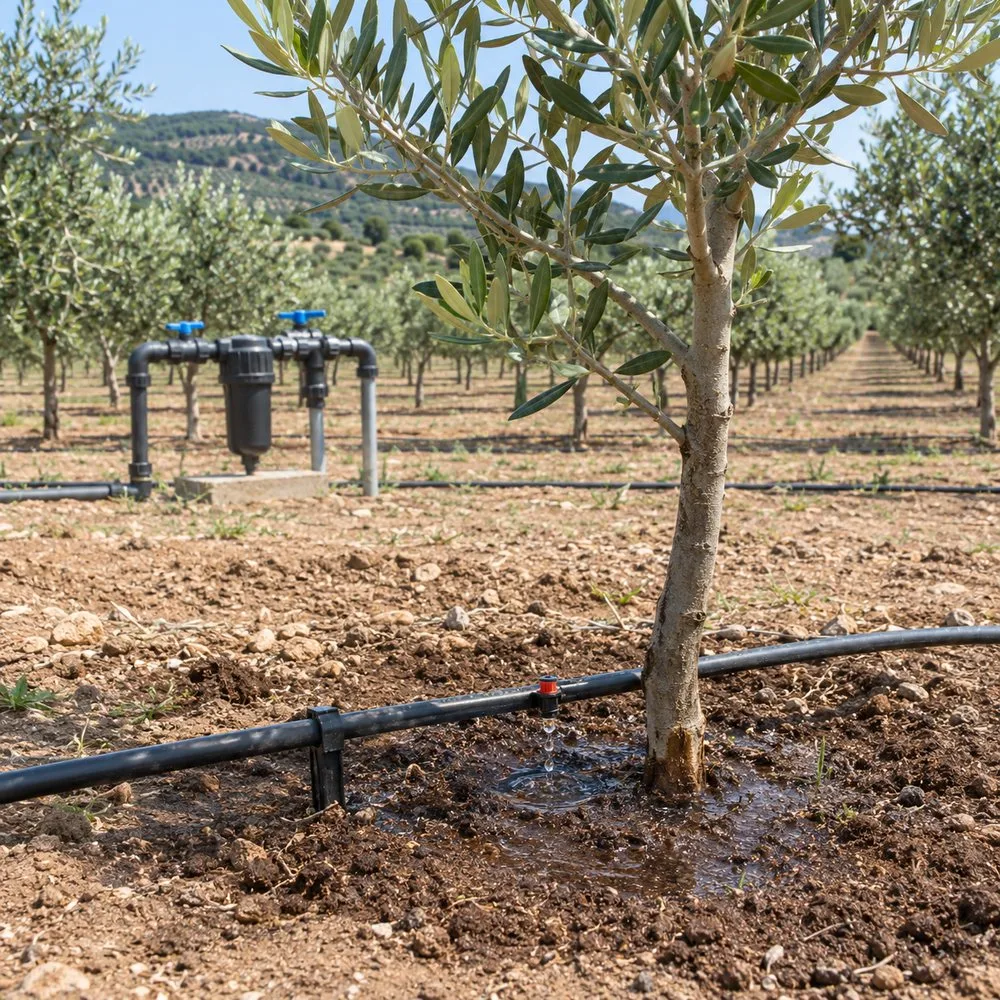
Irrigation infrastructure should be assessed alongside water rights and operating costs. Illustrative image.
Assessing Turkey’s agricultural potential
Turkey’s varied climate and altitude support a range of agricultural activities, from arable crops to fruit, vegetables and olives. That diversity does not make every parcel suitable for every crop. Crop selection needs to match local water availability, soil conditions, labour and access to markets.
The budget for an established working farm differs from that for a newly planted orchard. An existing business may have harvest and expense records to review. New planting requires an allowance for establishment, maintenance and finance until commercial yields are reached. Investors managing a farm remotely also need a clear arrangement for local management and oversight.
Investing in olive groves in Mugla and Milas
Memecik olives play a distinctive role in the olive-growing heritage of Milas. The Turkish Patent and Trademark Office’s product specification links Milas olive oil to Memecik olives grown locally. Milas Zeytinyagi has been registered as a Protected Designation of Origin in the European Union since 23 December 2020. This recognises the product’s regional identity; it does not establish an individual grove’s income, certification or sale price. [6] [7]
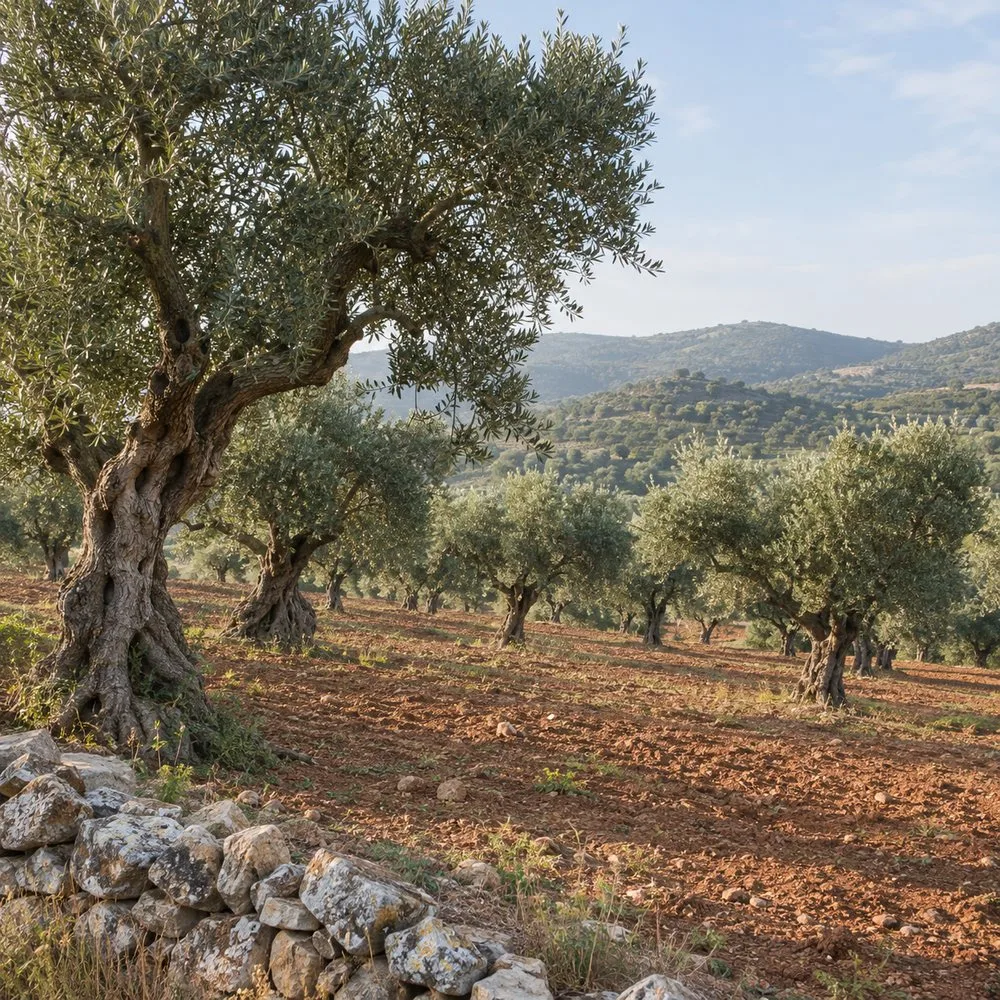
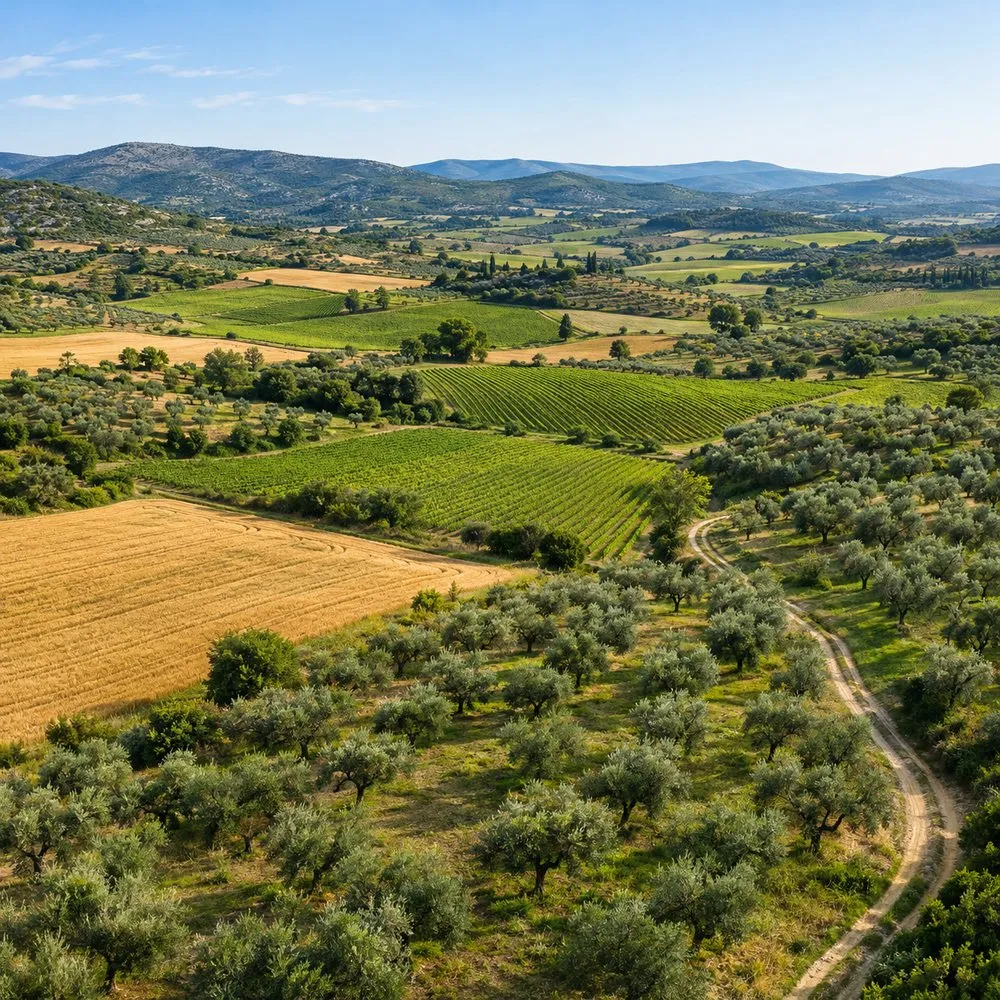
An illustrative interpretation of the olive-growing landscape around Milas; no specific parcel is shown.
Tree numbers alone are not a reliable measure of an olive grove’s productive capacity. Review tree age, variety, health, maintenance history and access for harvesting together. Several years of production records offer a more useful comparison than an exceptional harvest in one season. Distinguish the seller’s statements from documentary evidence.
How the olives or oil will be sold is equally relevant. Harvest labour, transport, pressing, storage and marketing costs affect the net result. A plan to sell branded olive oil also needs to address consistent quality, traceability and the necessary registrations.
To compare local land types, explore our olive grove for sale in Milas Bayir and half share in agricultural land for sale in Karapinar, Milas. Shared ownership, rights of use and the precise interest being sold require separate assessment. Ask our team to confirm current availability and supporting documents.
Production potential and net returns
The ability to grow crops does not by itself make an investment profitable. Farming the land directly, leasing it or working with a local grower involve different responsibilities and cash flows. Maintenance, labour, irrigation, energy, equipment, insurance, finance and other relevant expenses must be deducted from production income before returns can be assessed.
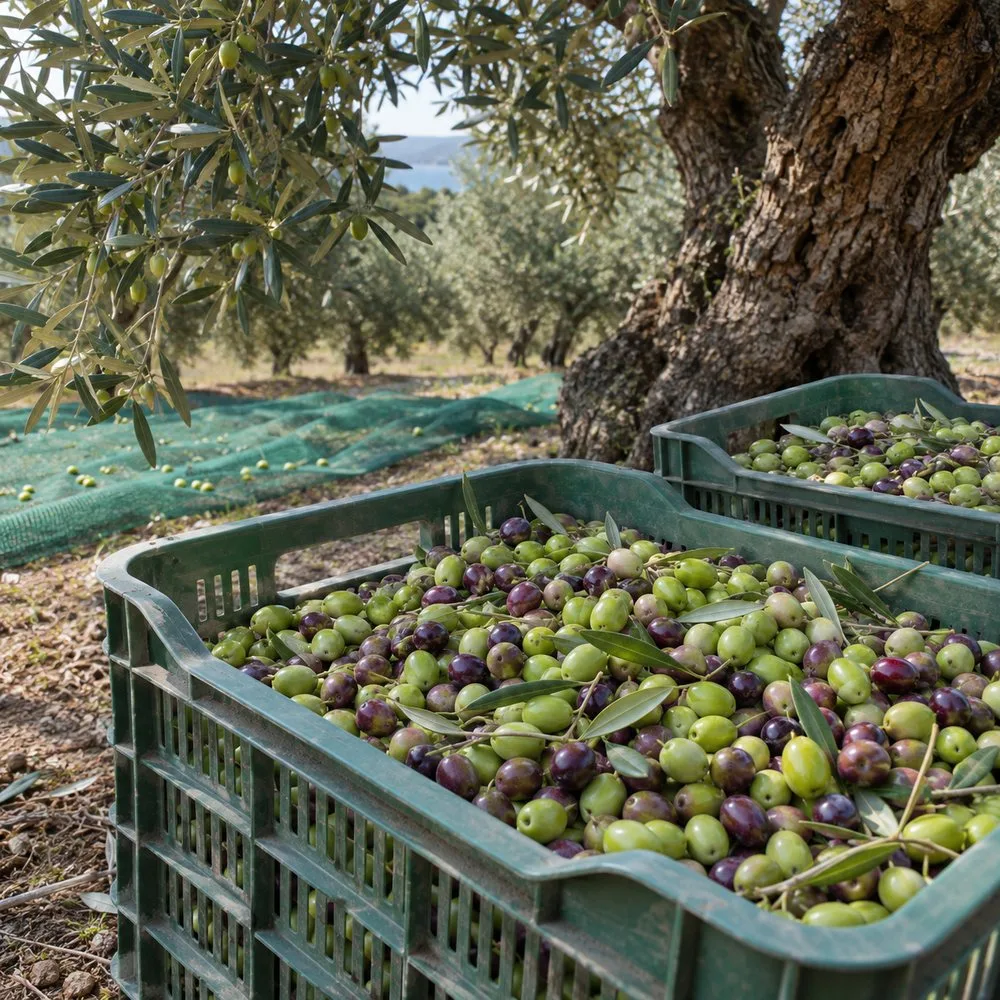
Harvesting, processing and marketing costs matter alongside crop volumes. Illustrative image.
Add title transfer and transaction costs, necessary improvements and working capital to the acquisition budget. Model lower yields, weaker crop prices and rising costs separately. The time needed to resell the land may also be uncertain. Assess operating income and any potential change in resale value separately, so that assumed capital growth does not conceal operating losses.
Can foreign buyers acquire agricultural land in Turkey?
Foreign individuals may acquire property subject to legal conditions, including nationality and the property’s location. The general framework includes a nationwide limit of 30 hectares per person and a district-level cap on foreign ownership of 10% of the land area eligible for private ownership. Security zones and additional nationality-specific or regional restrictions also need checking. These limits do not guarantee that an application will be approved. [8]
Agricultural land acquisitions are subject to the Ministry of Agriculture and Forestry’s permission and assessment process. A foreign buyer acquiring undeveloped property must submit the proposed agricultural project for approval by the relevant Ministry within two years of acquisition. Approval and implementation requirements must then be followed. Failure to comply can lead to compulsory disposal procedures. [9] [8]
Different rules may apply to overseas companies and Turkish companies with foreign capital. Establishing a company does not automatically remove acquisition restrictions. Before committing to a purchase, obtain confirmation for the specific buyer and parcel from the land registry office, the relevant agricultural directorate and an independent legal adviser. [8]
What should be checked before buying farmland?
- Ownership: The title classification, share being sold, registered restrictions and encumbrances, occupation and tenancy arrangements.
- Access and boundaries: Cadastral boundaries, lawful road access, actual use and any necessary rights of way.
- Production: Soil and water analyses, historic crop and expense records, tree condition and equipment requirements.
- Permissions: Water use, the legal status of existing buildings and agricultural or conservation restrictions.
- Operating budget: Funding for maintenance, harvesting, labour, irrigation, marketing and poor seasons.
Owning farmland or an olive grove does not itself grant permission to build a home or tourist facility. Agricultural use, changes of use and building permissions must be assessed separately under the relevant legislation and authority decisions. Foreign buyers’ agricultural projects are also subject to restrictions on non-agricultural use. [10] A purchase should not depend on an assumption that the land will receive development rights in the future.
Plan your land search with Turnkey Properties
Operating in Bodrum since 2010, Turnkey Properties helps buyers narrow their search for land in Bodrum and Milas by location, ownership structure and intended use. Our local office and international service help you compare property information clearly and arrange on-site inspections.
Tell us about your production objectives, budget, investment horizon and intended management arrangements. Agricultural and legal assessments by the relevant specialists help establish a sound basis for your decision. Discuss your farmland or olive grove search with Turnkey Properties.
Investment note: Farmland investment offers no guaranteed profit, capital growth or future development rights. This article provides general information and does not replace technical, legal and financial due diligence on an individual parcel.
Sources
- Bill Gates, 2023 Q&A
- Nuveen Natural Capital, farmland investment capabilities
- United Nations, World Population Prospects 2024
- FAO, Land statistics 2001–2024
- FAO, The State of the World’s Land and Water Resources 2025
- Turkish Patent and Trademark Office, Milas olive oil specification
- European Commission eAmbrosia, Milas olive oil registration
- TKGM, property and land registry guide for foreign buyers
- Ministry of Agriculture and Forestry, land acquisitions by foreign individuals
- Provincial Directorate of Agriculture and Forestry, acquisition permits and agricultural projects
Sources checked: 10 November 2026. The cover and article images were generated with AI for illustrative purposes. They do not show a specific property, business or actual harvest.
Article information and sources
- Author
- Samet Şahan
- Published
- Updated