



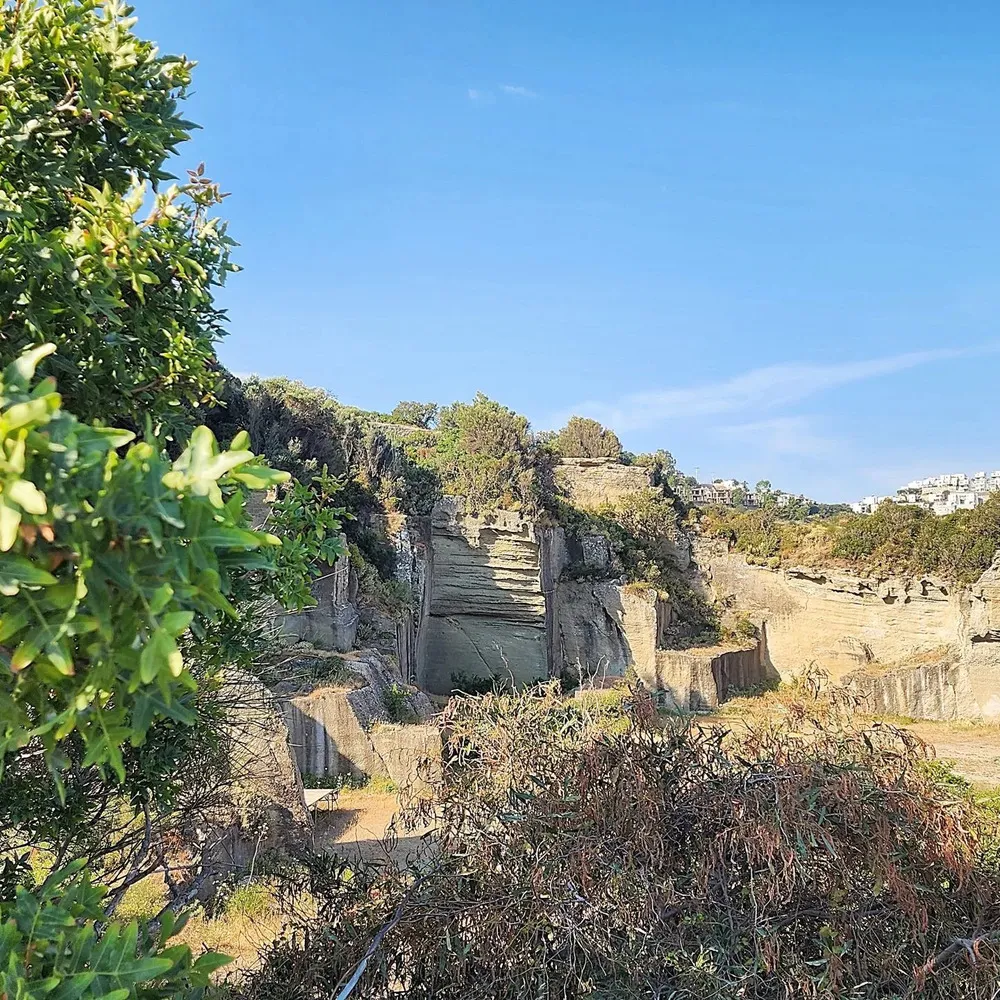
The Myndos Koyunbaba Quarry in Gümüşlük is a historical site where the building stones of Bodrum were extracted in ancient times.
Located at the western tip of the Bodrum Peninsula, the Ancient Quarry in the town of Gümüşlük is not only a natural formation but also a significant archaeological heritage that has emerged as the primary stone source for the Ancient City of Myndos. Today, this area, also known as the "Koyunbaba Quarry," has been the site from which stones have been extracted to give life to monumental structures in Bodrum and its surroundings for thousands of years.
Historical Context and Myndos Connection
Myndos, one of the important cities of the Ancient Period, underwent a significant construction process during the time it was rebuilt by the Carian Satrap Mausolos (4th century BC). During this period, the stone needs for many structures, from the city walls to temples, were met by the Koyunbaba Quarry, located just 3 km away from the city. The green andesite stones extracted from here were used in both the walls of Myndos and the foundation blocks of the famous Mausoleum in Halicarnassus (Mausoleion).
Archaeological Findings and Stone Properties
Archaeological studies have shown that the stones extracted from the Koyunbaba Quarry match the architectural remains in Myndos perfectly. These stones have a jade-like texture that is easy to work with and aesthetically pleasing. Therefore, they were used not only in walls and temples but also in harbor structures, breakwaters, and fill blocks. Notably, this stone, known for its water resistance, has shaped the architectural character of the Bodrum Peninsula for centuries.
|
|
|
|
Quarry and Maritime Transport
On the rocky shore just in front of the quarry, remnants of an ancient loading dock have been found. The holes carved into the rock for tying ropes, traces of platforms, and hollows used for loading block stones indicate that this area was used for transporting stones by sea. This reveals that the Koyunbaba Quarry was not only a local but also a regional stone supply center.
Economic and Architectural Impact
In ancient times, quarries held strategic importance. In this context, the Koyunbaba quarry directly influenced the architectural development by meeting the construction material needs of cities like Myndos and Halicarnassus. Activities such as stone cutting, loading, transportation, and processing also contributed to the regional economy.
Current Status and Conservation Efforts
Today, the Koyunbaba Ancient Quarry is an archaeological site that can be visited in the open air. However, the reduction of the site status of the Ancient City of Myndos in 2022 has raised concerns about the preservation of the quarry. Local residents and environmentalists have organized protests and campaigns to protect this unique heritage.
Living History with Cultural Events
As part of the annual Gümüşlük Classical Music Festival, the Koyunbaba Quarry is also used as a concert venue. The acoustics reflected by the thousands of years old stone surfaces create a unique atmosphere when combined with classical music. These concerts contribute to the promotion of the ancient quarry and indirectly support its preservation.
The Gümüşlük Ancient Quarry has made significant contributions to Bodrum's architectural and historical identity as a natural window opened to the past. The continued scientific study and effective preservation of this unique area is of great importance both in terms of regional history and cultural continuity.